
cartoons
Five Episodes to Prove It
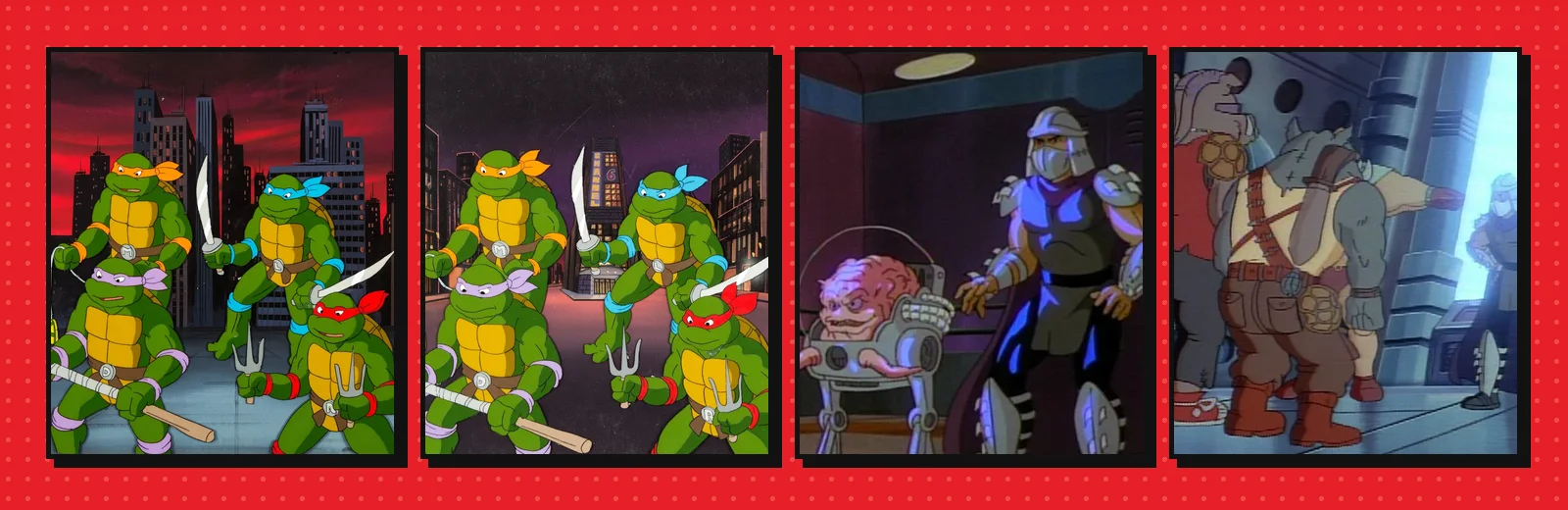
The 1987 cartoon started as a five-part trial and ran for ten seasons. Its Turtles differ from the comic in ways you can see in the masks and the broadcast schedule.
In the last week of 1987 a miniseries about teenage turtles went out in syndication as a trial.1 Playmates had made a TV deal the condition of making toys.
It worked, and the show that followed changed the Turtles in ways you can see, starting with the masks.
Four colors
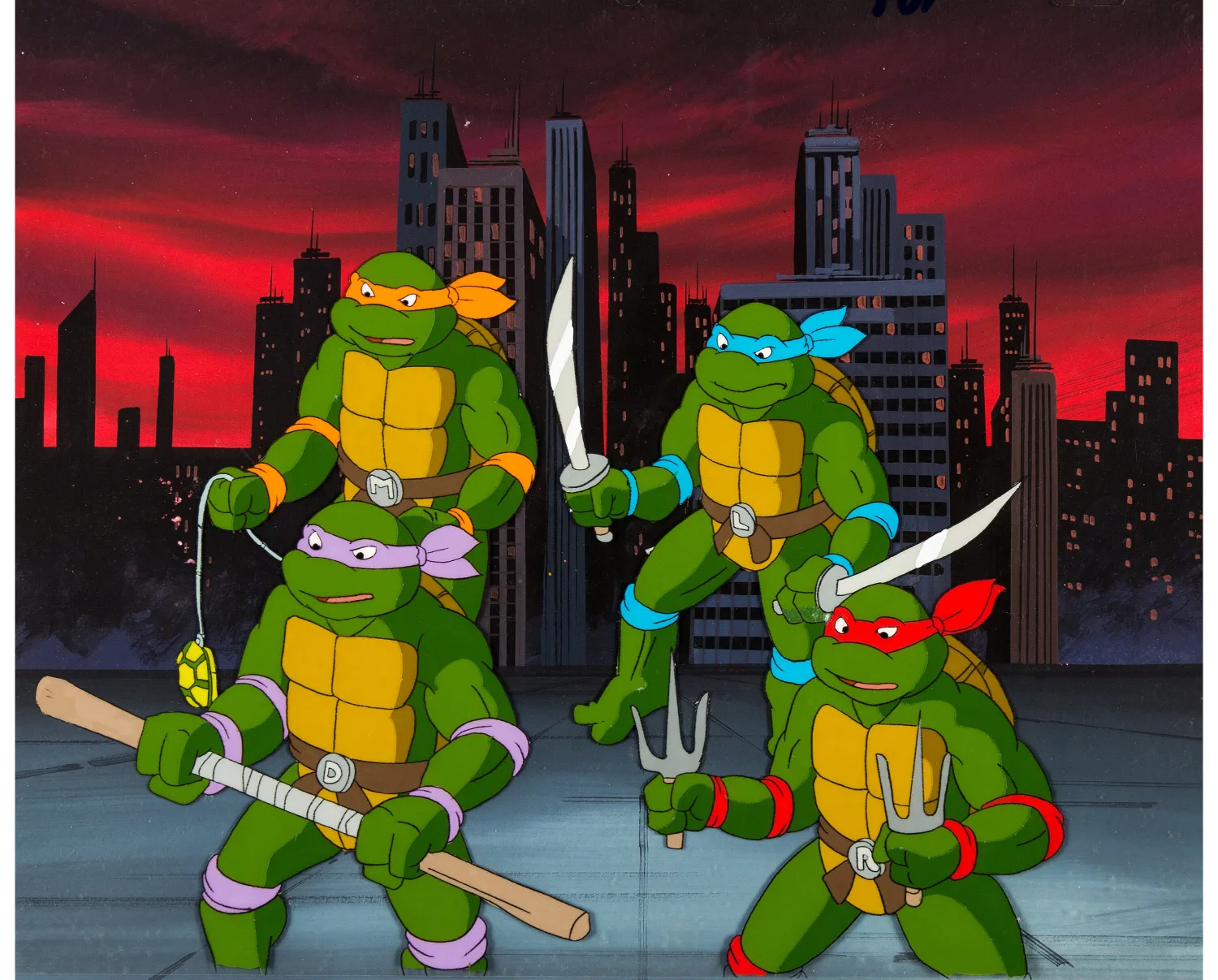
On the cover of the first Mirage issue in 1984, all four Turtles wear red. In the cartoon, each brother has his own color. Leonardo wears blue and carries katana, and Donatello wears purple and carries the bo staff. Raphael wears red and carries sai, while Michelangelo wears orange and carries nunchaku.2
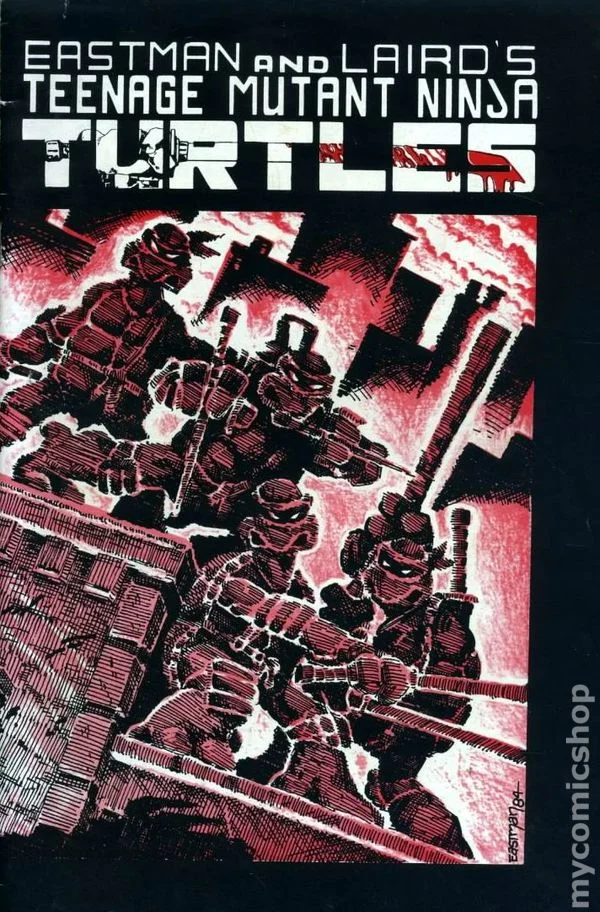
We do not have a source for why the colors were added, but the likely reason is practical: children need to tell the leads apart at a glance, which takes different masks, and a toy line needs figures that can be told apart too.
Tone and censorship
The show also shifted the tone. It was changed considerably from the darker comics to suit children and families, with Shredder and Krang given expanded roles and Krang’s Dimension X technology driving many of the villains’ schemes. The theme song, written by Chuck Lorre and Dennis C. Brown, came together on a $2,000 budget and a 48-hour deadline.
Then came the broadcasters. In the UK the show aired as Teenage Mutant Hero Turtles, and the nunchaku scenes were edited for international airings. In the United States the nunchaku lasted longer, but they too were eventually dropped in favor of a grappling hook called the Turtle Line.3
From miniseries to Saturday morning
The full-time run started on October 1, 1988 and ended on November 2, 1996, with the last broadcast on CBS. Syndication came first: Saturday-morning syndication through September 1989, then weekday afternoons until March 1991, by which point the show was airing daily on more than 125 stations. CBS added it to its Saturday morning lineup from September 8, 1990, first as an hour and then, from 1994, as a half-hour.
Cam Clarke was Leonardo, Barry Gordon Donatello, Rob Paulsen Raphael and Townsend Coleman Michelangelo, with Peter Renaday as Splinter, Renae Jacobs as April O’Neil, James Avery as Shredder and Pat Fraley as Krang. It was also criticized as a half-hour toy advertisement, and Australia’s Council for Children’s Films and Television used that description. The criticism was not entirely unfair, since the toys were the reason for the show.
Where to start
Every episode is in the 1987 episode guide, in broadcast order, from “Turtle Tracks” onward.
Footnotes
-
Production and broadcast details in this piece follow the Wikipedia article on the 1987 series; the budget for the miniseries was almost $2 million. ↩
-
Mask colors and weapons are as described on the same page. The Mirage covers we hold show red masks throughout. ↩
-
The Wikipedia article places the change in the fourth season. Some sources describe it slightly differently, so we give the broad outline rather than an exact episode. Our own season pages carry the episode lists if you want to find the switch yourself. ↩
KEEP READING
MORE FEATURES
 cartoons
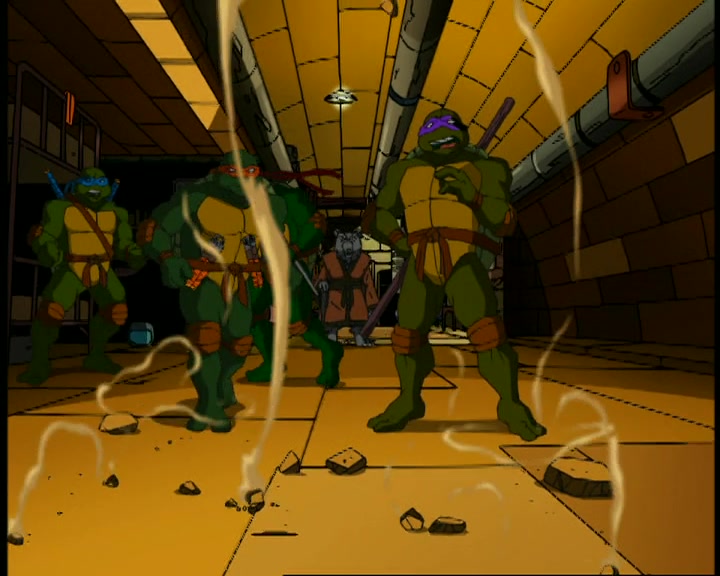
Going Back to the Sewer: How the 2003 Series Found the Comic's Tone
The 4Kids Turtles of 2003 opened with a scene lifted from the first Mirage issue and spent the next several seasons trying to keep four brothers and their father at the centre of a bigger story.
Read → comics The Joke That Got Out: How Two Roommates Made the Turtles in 1984
A doodle made to get a laugh in a Dover living room, a loan from an uncle, and a black-and-white book that never once explained that it was a joke.
Read →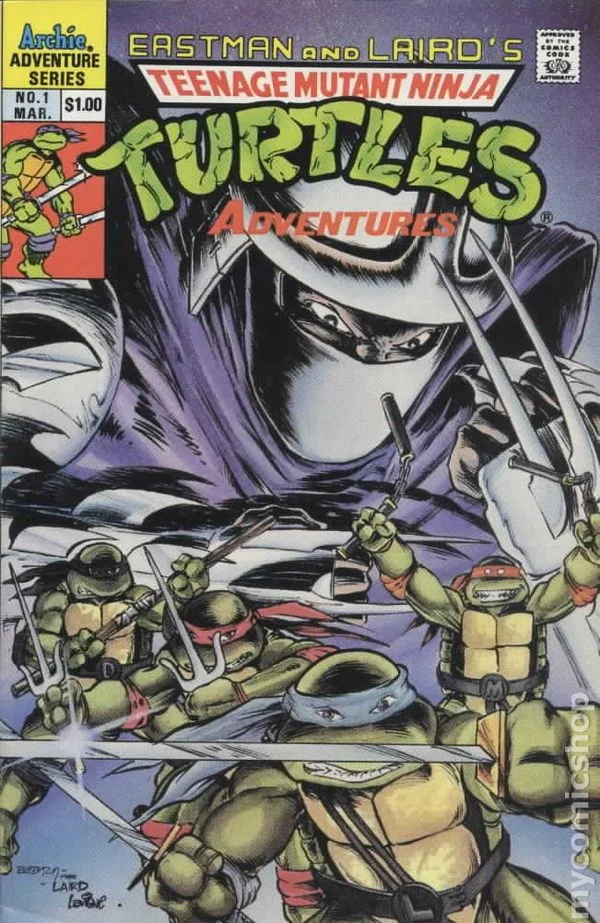 comics
The Turtles Archie Made: A Cartoon Tie-In That Grew Its Own World
Archie's Teenage Mutant Ninja Turtles Adventures began as an adaptation of the cartoon and became the place where the Turtles' universe got bigger than either the cartoon or the black-and-white book.
Read →