Subscribe
The Films · 1990 to Today The one that started it all. Walk every Turtles film, from this 1990 original through Mutant Mayhem, on the movies hub. Open →
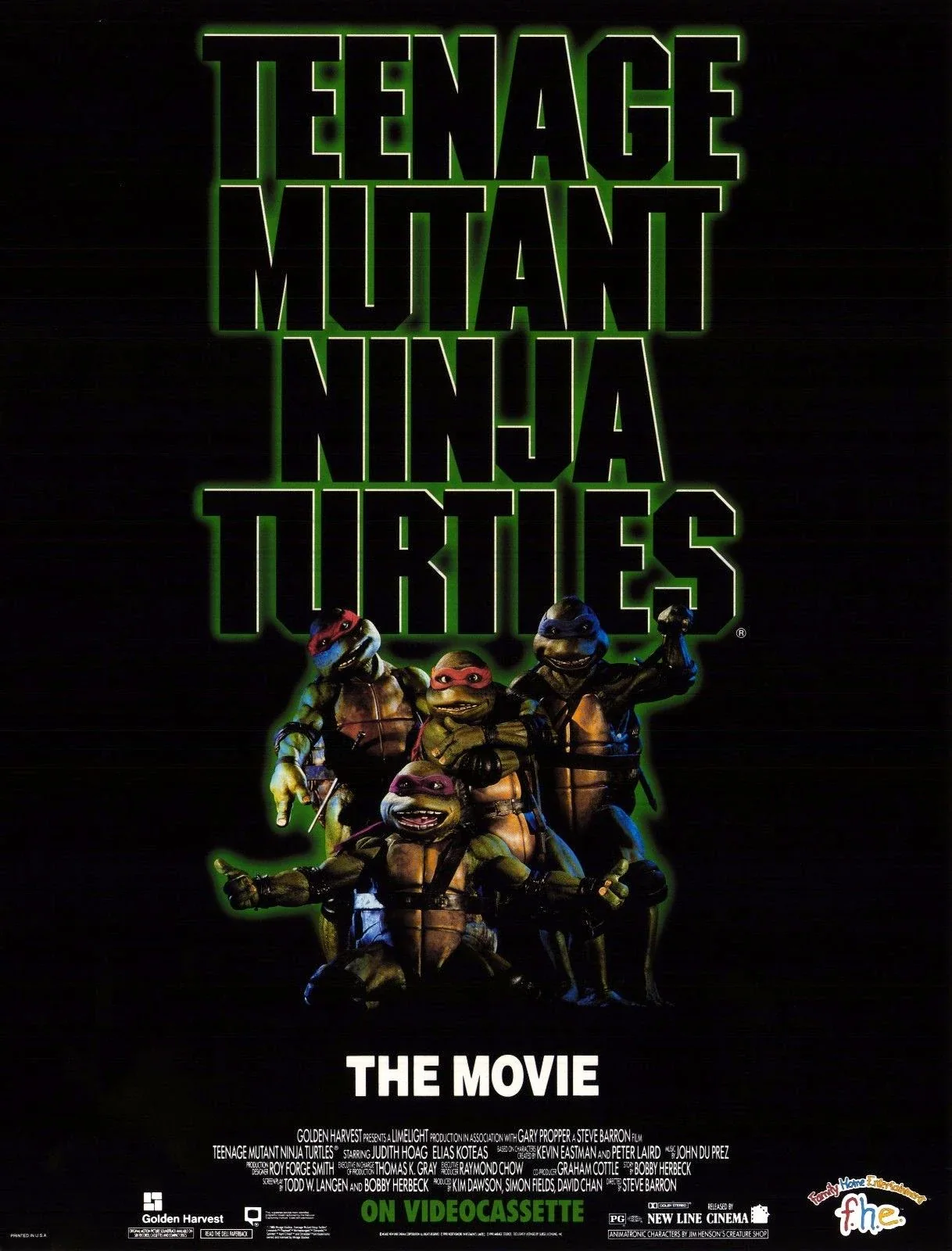
Teenage Mutant Ninja Turtles (1990) theatrical poster

★ THE FIRST LIVE-ACTION FILM · 1990

Teenage Mutant Ninja Turtles

Hey dude, this is no cartoon.

Steve Barron’s 1990 Teenage Mutant Ninja Turtles is the one that started it all: a darker, comics-faithful blockbuster built on seventy-pound Jim Henson Creature Shop suits, and the highest-grossing independent film of its time. This is the deepest record of it anywhere: every score, every performer, every secret, and the long road that got it to the screen.

46%Critics
81%Audience
1h 33mPG
Mar 301990
DirectorSteve Barron
ReleaseMARCH 30 - 1990
Runtime1h 33m
RatingPG
GenreLive-action superhero comedy
StudiosNew Line Cinema / Golden Harvest / Limelight

★ THE VERDICT

Every score, in one place.

Critics in 1990 were split: a 46 percent Tomatometer hides a four-star Empire rave next to an EW F. Audiences and the decades since have been kinder, with an 81 percent crowd score and a 6.8 on IMDb. The constant in every review is praise for the Henson Creature Shop suits.

46%RT Tomatometer
Critics - 57 reviews - avg 5.1
81%RT Popcornmeter
Audience score, 250k+ ratings
51Metacritic
21 critics - mixed or average
6.8IMDb
Audience rating, out of 10
3.39Letterboxd
out of 5
4/5Empire
Lloyd Bradley, Empire
★★★★★
Nowhere near as bad as it might have been, and probably is the best possible Teenage Mutant Ninja Turtle movie. It supplies, in other words, more or less what Turtle fans will expect.
Roger Ebert · Chicago Sun-Times
★★★★
The movie Teenage Mutant Ninja Turtles far exceeds expectation, largely because it is worlds removed from the kiddies TV cartoon. A well-rounded, unpretentious, very funny, knockabout adventure.
Lloyd Bradley · Empire
So poorly photographed that the red-masked turtle looks almost exactly like the orange-masked one. Yet there would have been no film at all without Jim Henson and his Creature Shop.
Janet Maslin · The New York Times
None of the four turtles or Splinter has any personality. A young audience might enjoy it, but I would have gone for it too had I been raised on Nintendo games.
Owen Gleiberman · Entertainment Weekly
Praised for tongue-in-cheek humor and amusingly outlandish martial arts, but visually rough around the edges and sometimes sluggish in its plotting.
Staff Review · Variety
★★★★★
The cynicism of the motion picture industry will be apparent to any child who is exposed to the many product plugs for a nationwide pizza delivery company.
Gene Siskel · Chicago Tribune
Loveable monsters in baggy foam rubber suits who befriend lost children and smash things up in orgies of destruction that somehow never hurt anyone.
Kim Newman · Monthly Film Bulletin
The fights and stunts are genuinely exciting, made all the more remarkable by the fact that they are mostly being done by guys in 50 pounds of foam rubber.
Den of Geek · Retrospective
Performing moves comparable to Jackie Chan and Jet Li while wearing bulky turtle suits and heavy heads they probably could not see out of, was a miracle.
Fred Topel · UPI (2025)
★★★★
A classic slice of nostalgia with extra cheese. Fans will feel at home as they witness our radical heroes in all their nineties glory.
Dom Fisher · Geek Vibes Nation

On a budget of about 13.5 million dollars, the film opened number one to 25.4 million over its first weekend, the biggest opening weekend an independent film had ever had. It grossed about 135.3 million domestically and 202 million worldwide, the ninth-highest-grossing film of 1990 and the highest-grossing independent film of its time, a record it held until The Blair Witch Project in 1999.

★ THE STORY

A darker, comics-faithful Turtles, far from the cartoon.

A crime wave grips New York, and Channel 3 reporter April O’Neil is chasing it. When she is mugged and rescued by four masked vigilantes, she falls into the world of the Teenage Mutant Ninja Turtles and their sensei Splinter, a mutant rat who taught himself ninjutsu in Japan watching his master Hamato Yoshi.

The Foot Clan, a hidden army of runaway teens led by the Shredder, kidnaps Splinter, and the brothers, joined by the vigilante Casey Jones, are driven from the city to a farmhouse to regroup. Steve Barron deliberately adapted the dark Mirage comics rather than the bright 1987 cartoon: this is a film about grief, anger and a broken family fighting to become whole, with the pizza jokes layered on top rather than at the centre.

“When I showed them the film, they said it is too dark, this is for kids, it has got to be colourful. I just dug my heels in.” Steve Barron, director
April O’Neil, the Channel 3 reporter who pulls the Turtles into the light.
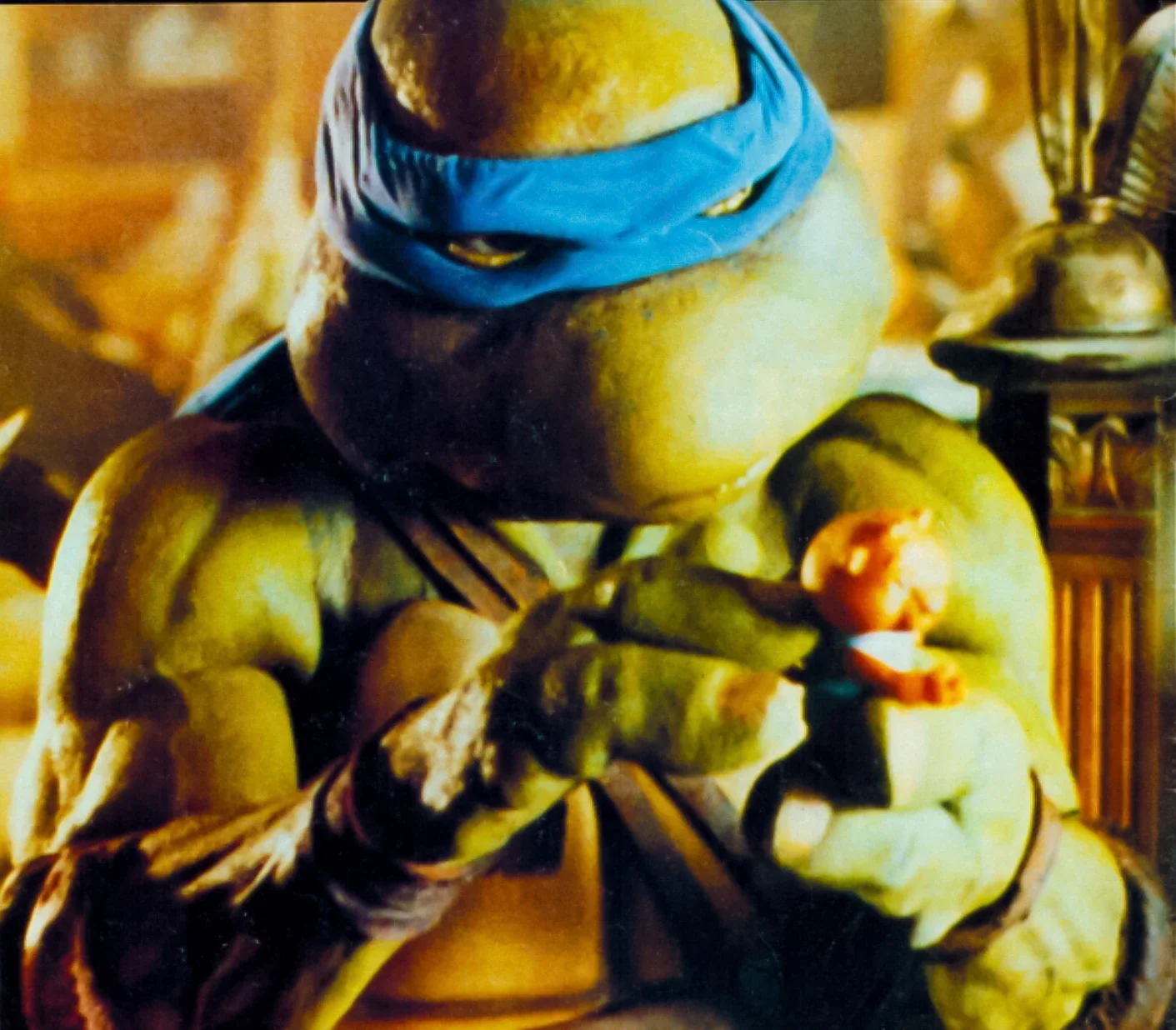
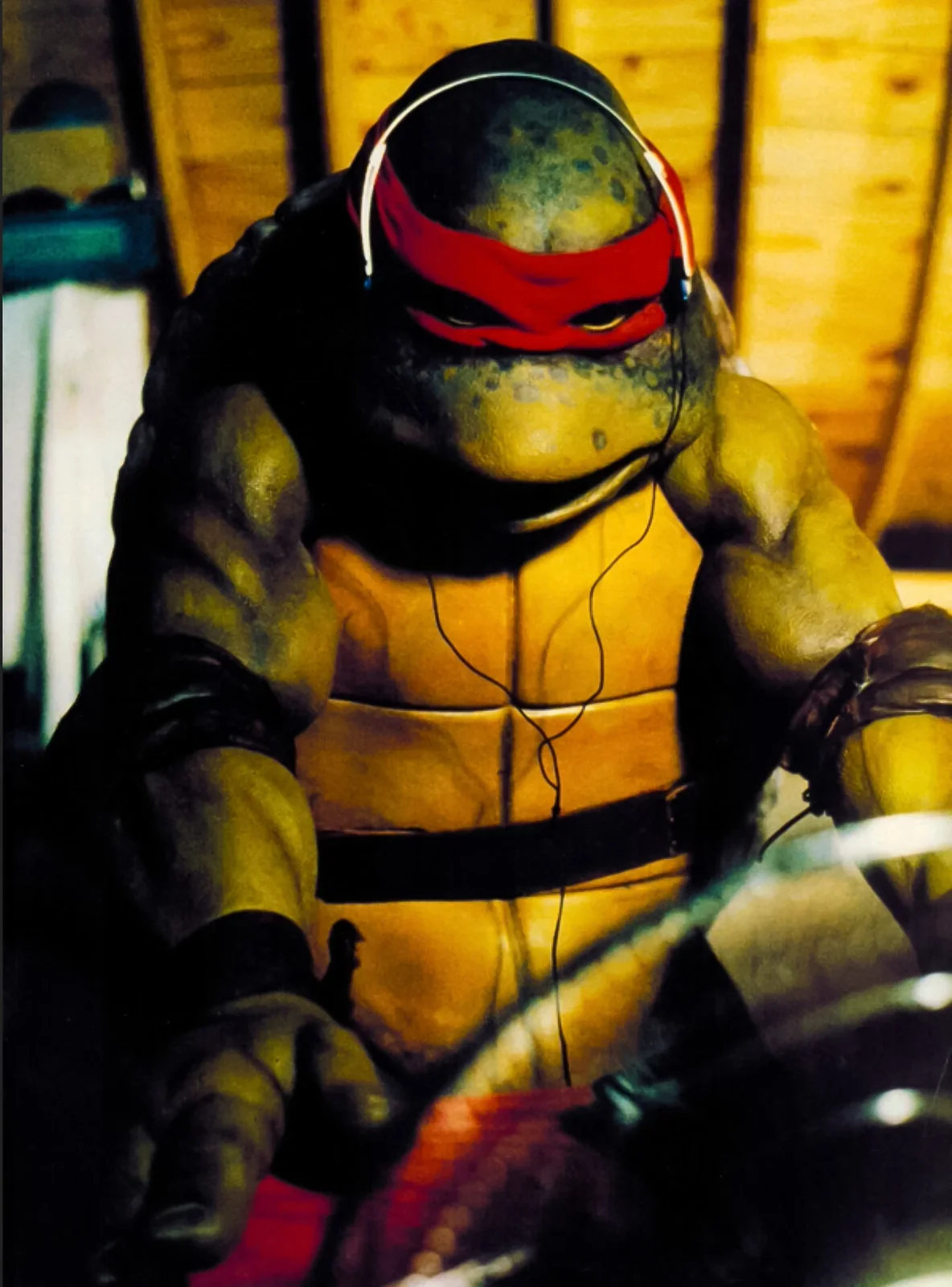
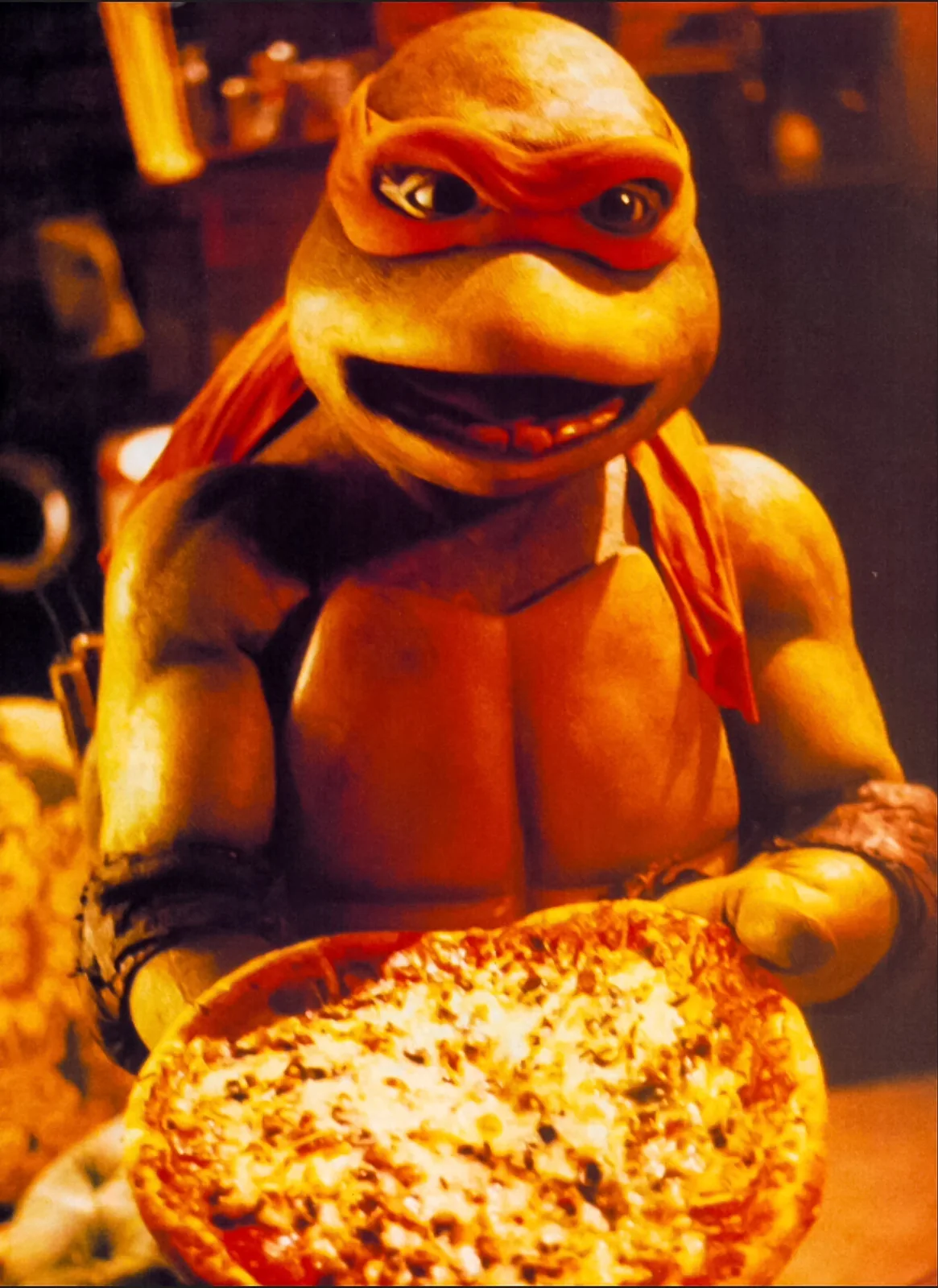
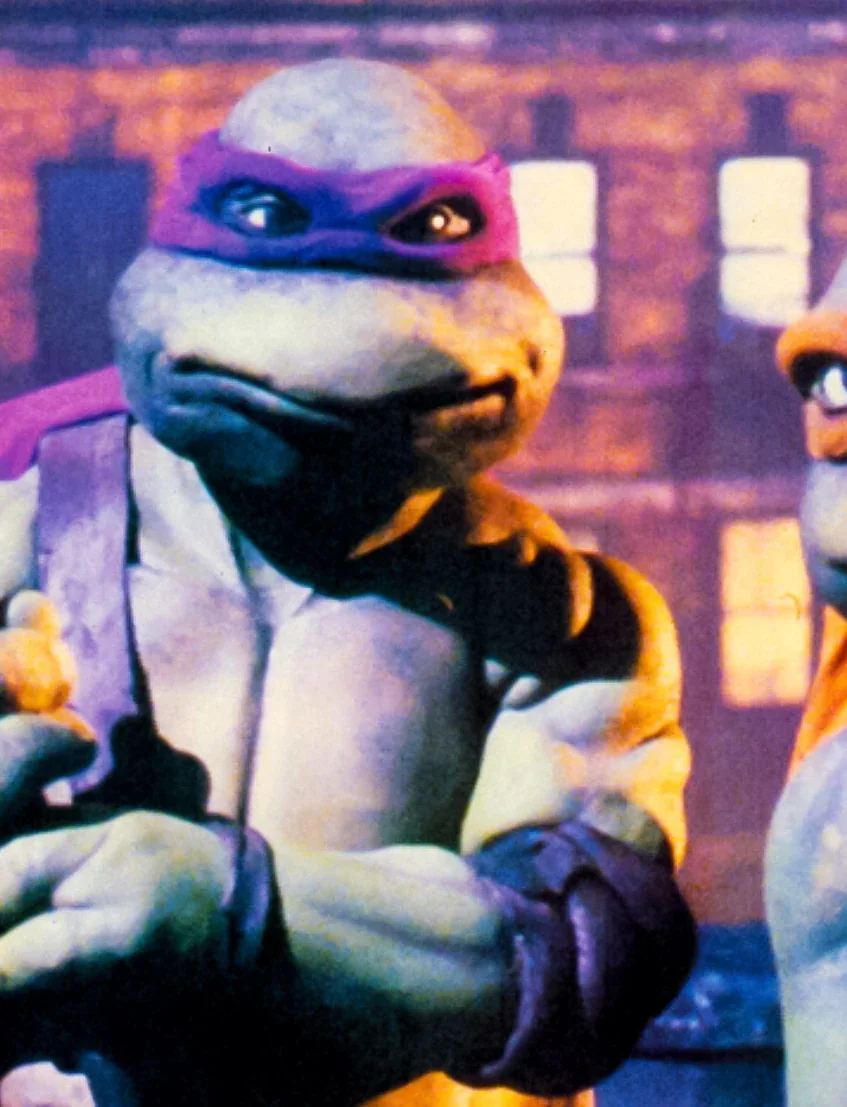
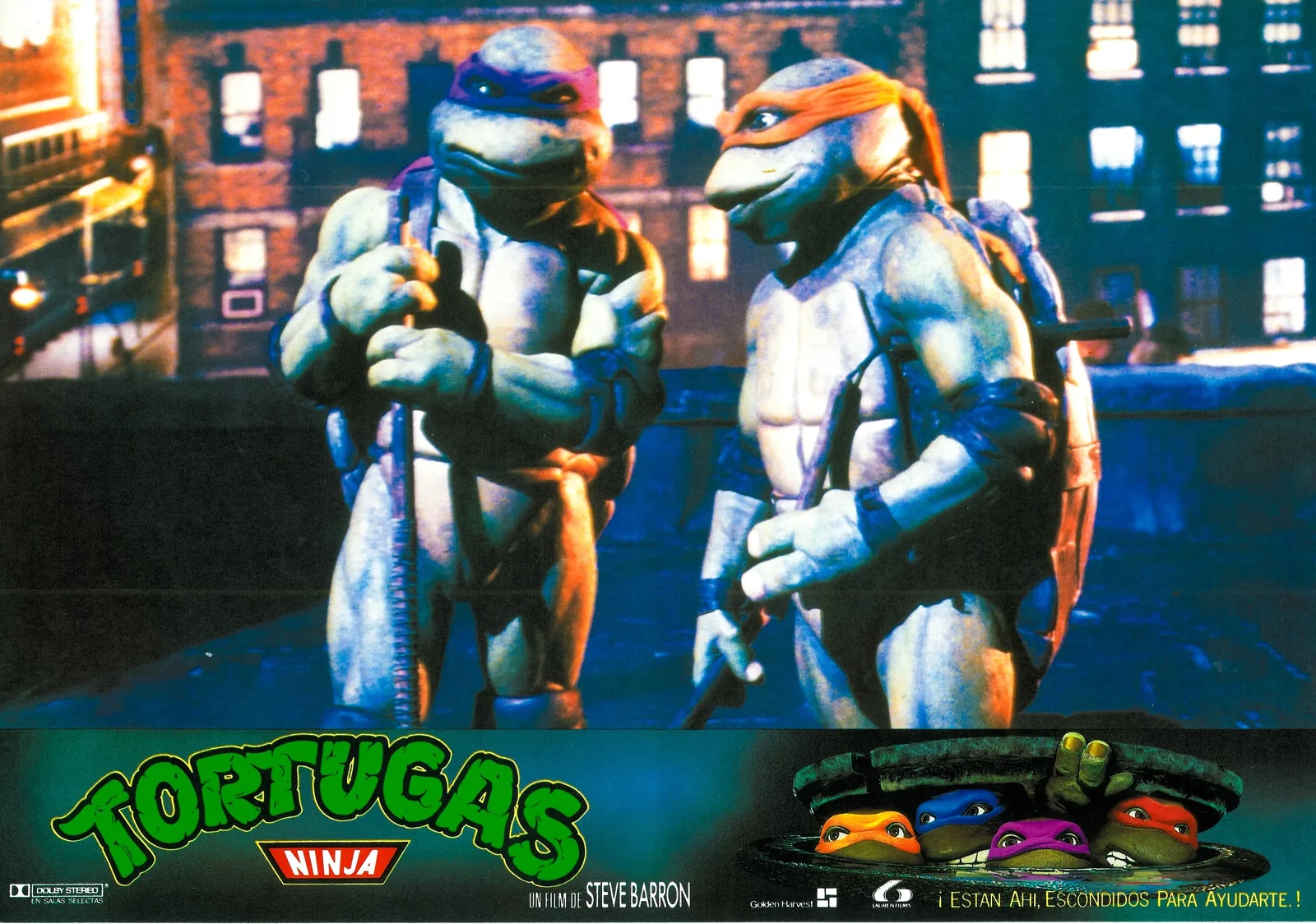
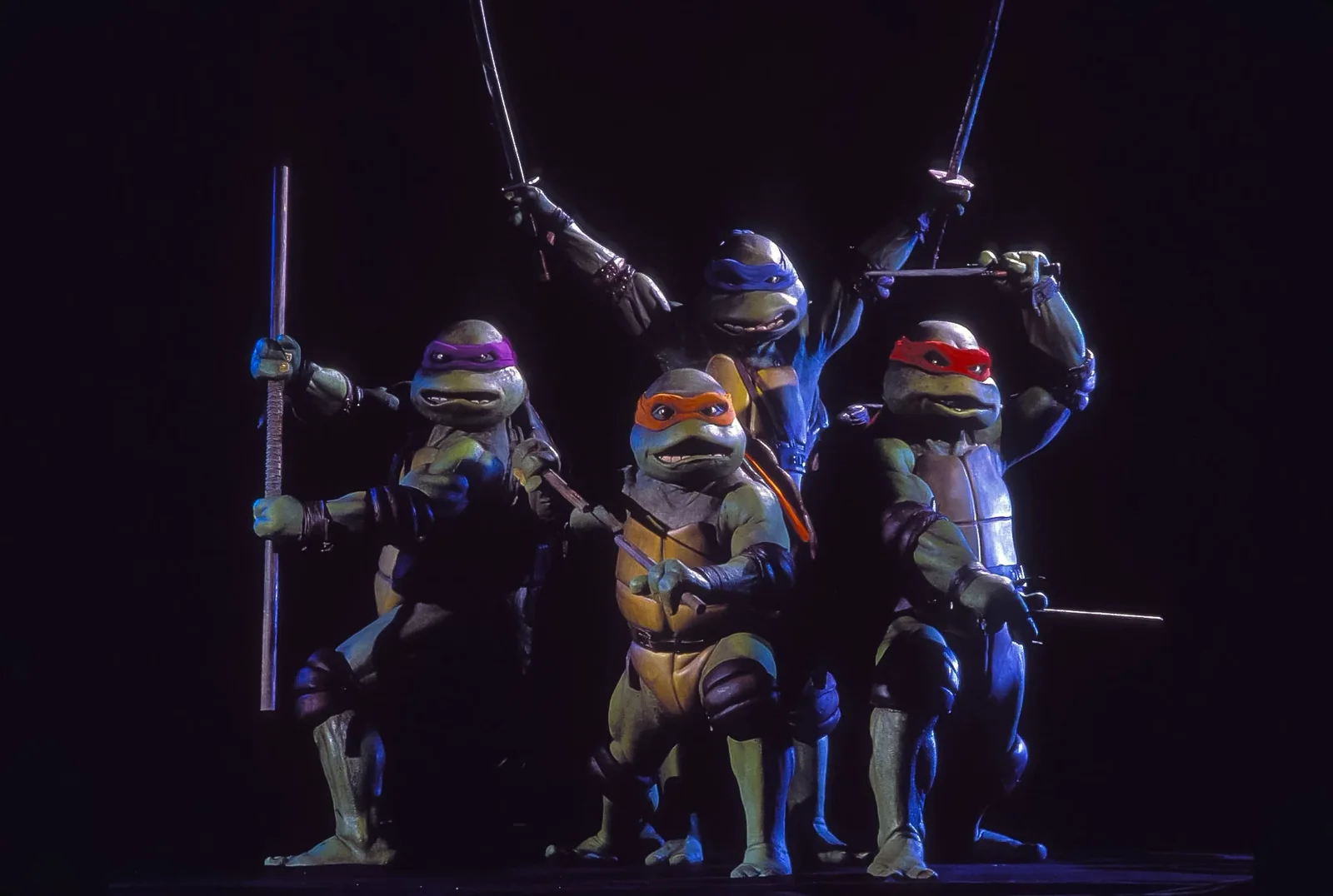
The four brothers, raised in hiding beneath the city.
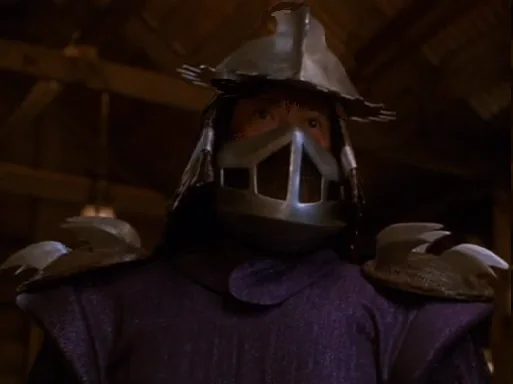
The Shredder, leader of the Foot Clan and the man who killed Hamato Yoshi.

★ INTERACTIVE CHARACTER EXPLORER

The heroes and villains of the 1990 film.

Every Turtle in this film was three people: a suit performer, a remote facial puppeteer and a voice actor. Tap any character for that full split, the backstory, and our read on how faithful the role is to the Mirage comics and the cartoon.

More of the cast and cameos

Charles Pennington Jay Patterson April’s supervisor at Channel 3 News and Danny’s father, who pressures April to drop the Foot story.
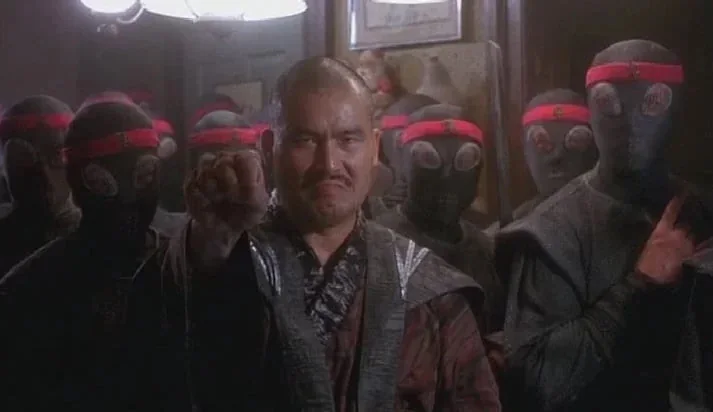
The Foot Clan Ensemble A hidden army of runaway and delinquent teens recruited with arcades, gambling and freedom, run like a sinister Pleasure Island.
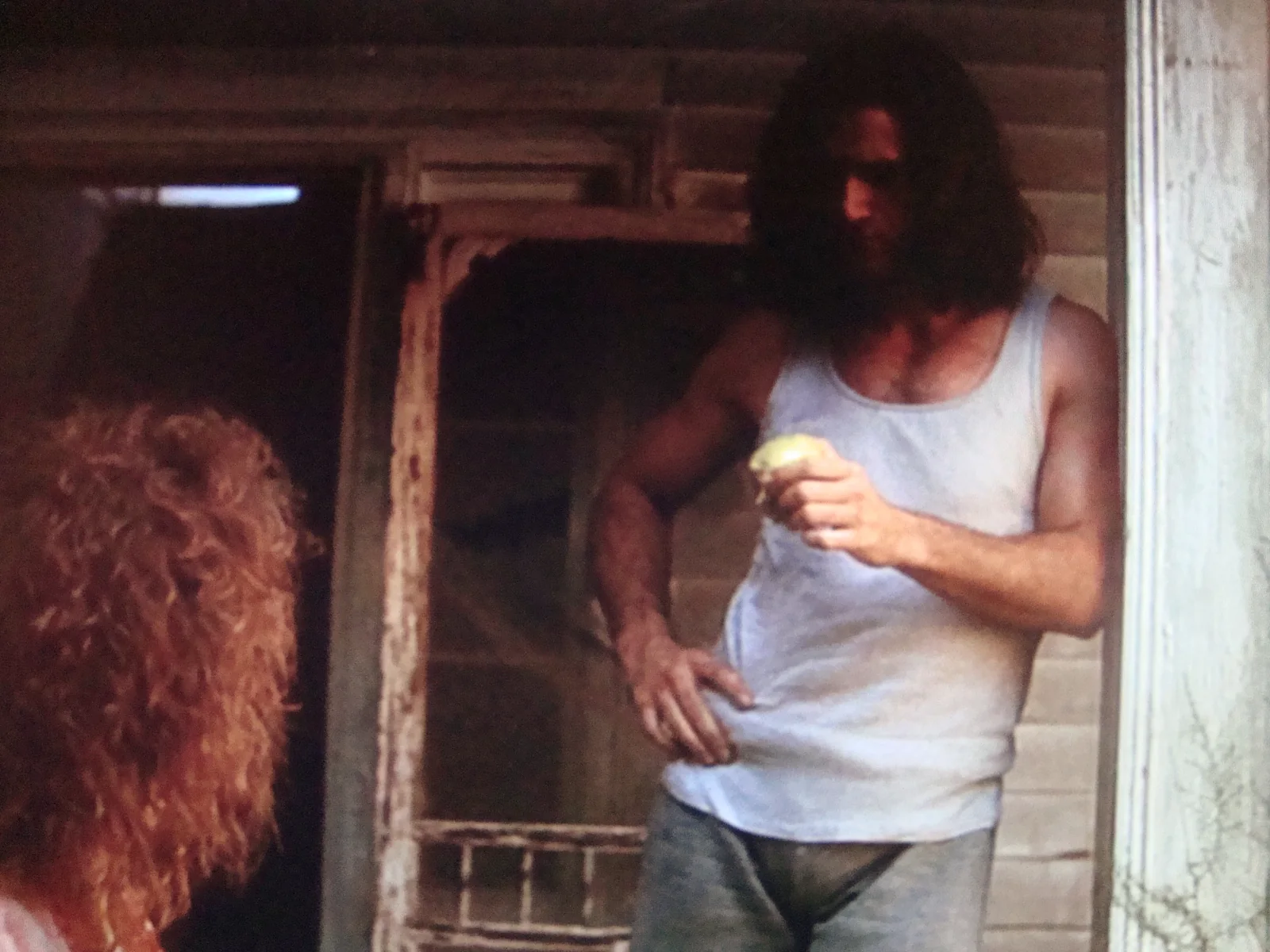
Foot Hoodlum Sam Rockwell In one of his first gigs, Rockwell plays the head thug who sells new recruits on cigarettes and the east warehouse on Lairdman Island.
Garbage Man Kevin Eastman TMNT co-creator Kevin Eastman cameos as the garbage-truck driver during the climactic street fight, the same truck that crushes Shredder.
★ THE FILM, MOMENT BY MOMENT

The moments that define the movie.

The beats the film is built on, walked in order. Click any still to enlarge. Everything from Raphael falls on is a spoiler. Scene clips are not hosted yet; the stills stand in, in slots built so clips can drop in later.

A crime wave and a missing sai

A wave of robberies grips New York and Channel 3 reporter April O’Neil is chasing the story. Mugged in an alley, she is rescued by an unseen group of vigilantes, and in the scuffle Raphael loses a sai that April recovers. The Turtles return to their sewer lair and their sensei, a rat named Splinter.

The Mirage comics open mid-battle, and so does the film.

Raph, Casey Jones and the park

Raphael slips to the surface alone, catches a screening of Critters, and runs headlong into Casey Jones, a hockey-masked vigilante swinging a golf bag of weapons. Their brawl in the park is lifted almost beat for beat from the Raphael micro-series comic.

Two hotheads meet, and the film finds its comic heart.

Splinter taken, the lair ransacked

Raph brings the unconscious April to the lair, unknowingly tailed by a Foot soldier. Splinter explains the mutation origin to her, and after the Turtles bond with April over pizza they return to find the lair torn apart and Splinter kidnapped. A blood puddle on the floor signals a darker film than the cartoon.

The family is broken, and the tone turns.

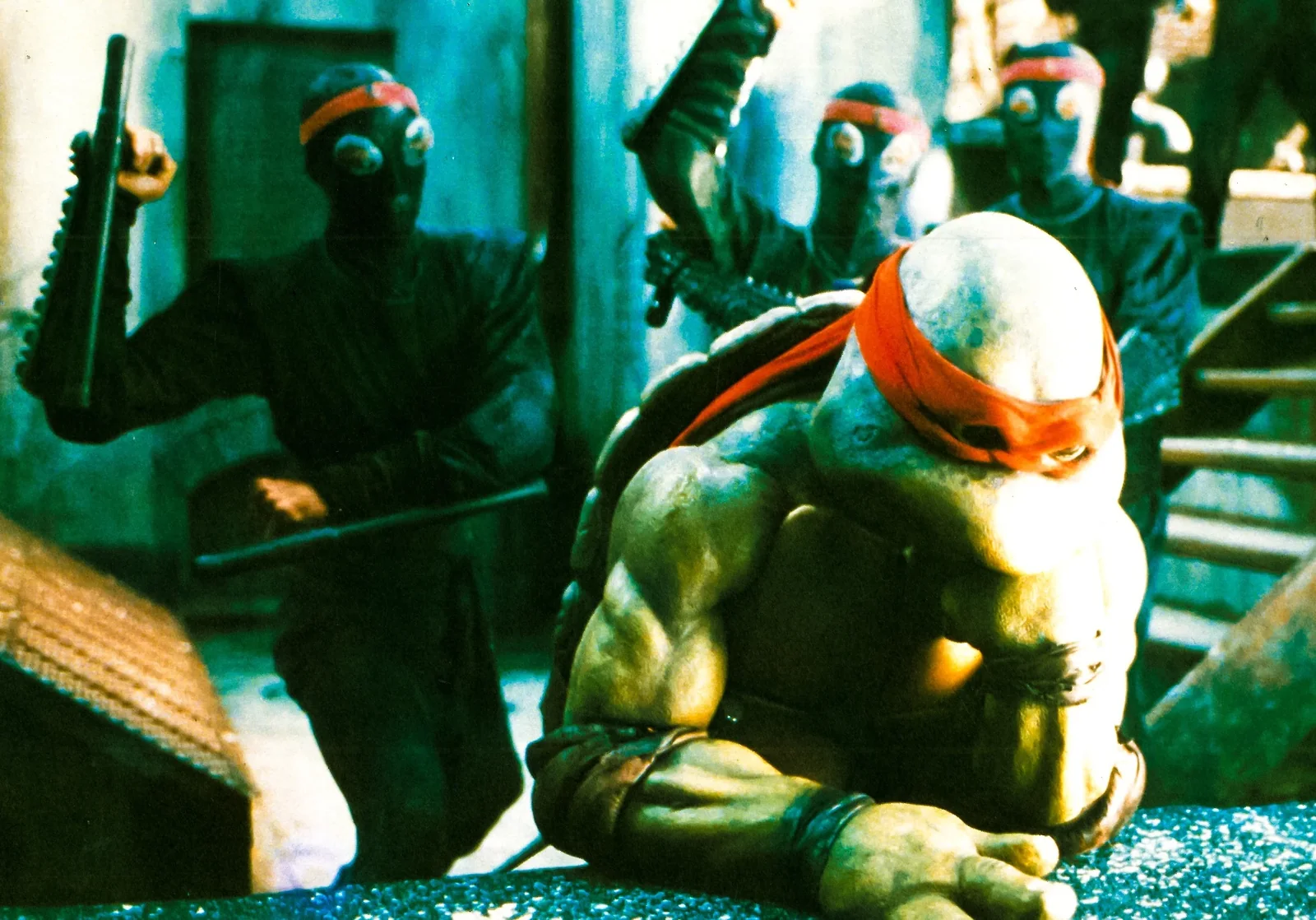
Raphael falls, the building burns

Hiding at April’s apartment, Raph argues with Leo over leadership, storms to the rooftop and is ambushed and beaten into a coma by the Foot. Casey helps the Turtles fight free and escape the burning building, and a fired April leads them out of the city.

A hero down, a home on fire, real stakes for a PG film.

The farmhouse and astral projection

The group retreats to April’s rundown family farm upstate. April bonds with Casey, Raph slowly recovers, and at a campfire the brothers reach the captive Splinter through astral projection. Michelangelo, who hides behind jokes, is the only one to cry.

The Empire Strikes Back second act, with Splinter as Yoda.

The origin: Hamato Yoshi and Tang Shen

Splinter tells Danny how, as an ordinary pet rat in Japan, he learned ninjutsu watching his master Hamato Yoshi. Yoshi fled to New York with Tang Shen to escape his rival Oroku Saki, who tracked and killed them both. Splinter links Saki to the Foot.

The tragedy that built the Shredder, told almost panel for panel.

Freeing Splinter, turning the Foot

Casey and Danny infiltrate the Foot hideout, free Splinter and defeat Tatsu, Shredder’s second-in-command. They convince the youngest Foot recruits that they have been manipulated by Shredder, hollowing out his army from the inside.

The runaway kids choose a different family.

The rooftop duel with Shredder

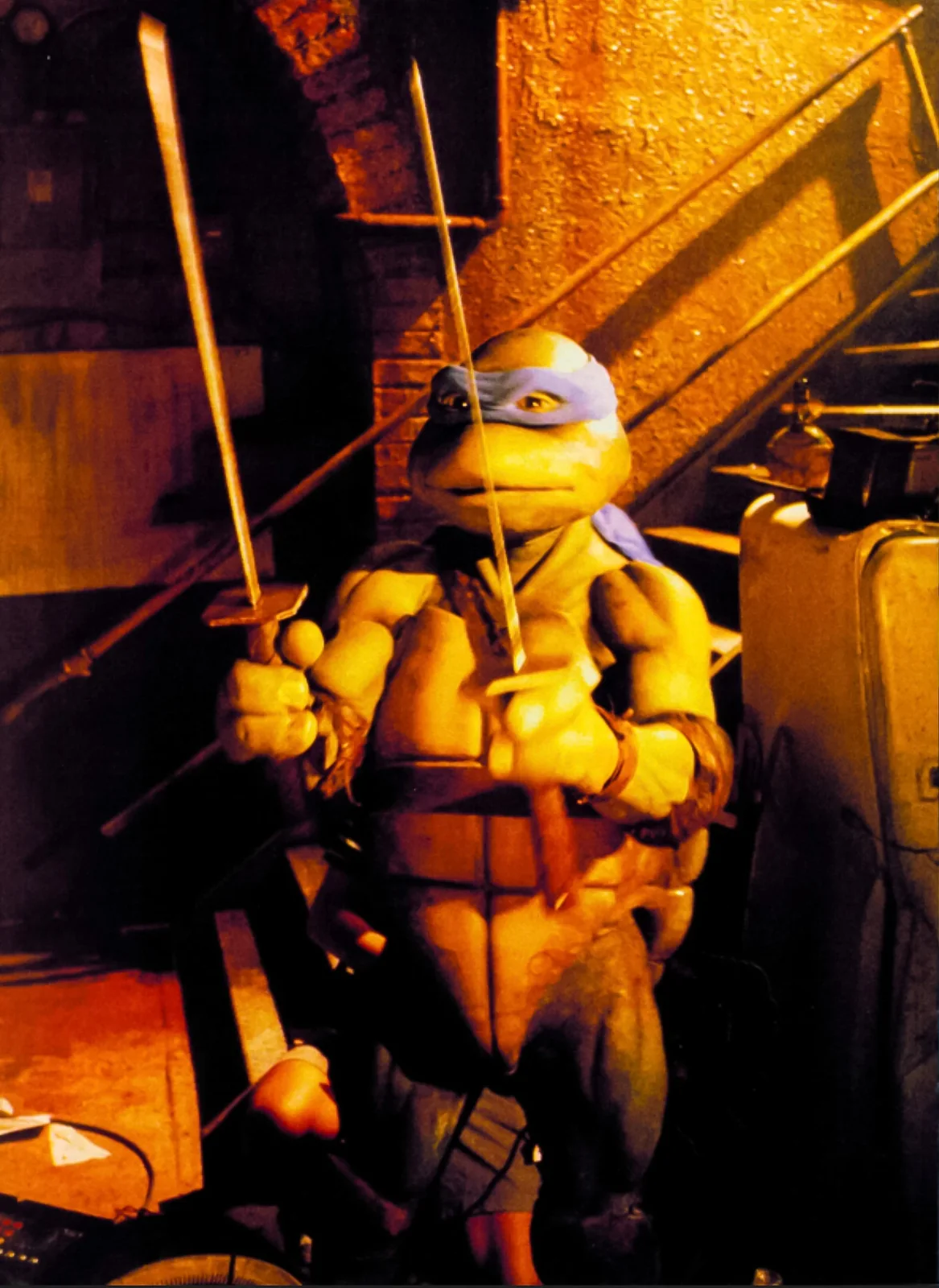
The Turtles drive the Foot into the streets and confront the spear-wielding Shredder on a rooftop. He beats them one by one, claims Splinter is dead and overpowers an enraged Leonardo, disarming all four.

The villain at his peak, the heroes at their lowest.

Splinter, the nunchaku and the truck

Splinter appears, names Shredder as Oroku Saki, and snares his spear with Mikey’s nunchaku, leaving him dangling over the edge. Shredder’s last thrown blade fails, Splinter drops him into a garbage truck below, and Casey accidentally triggers the compactor.

The sensei ends the fight his sons could not.

Turtle Power over the credits

The police arrest the Foot and recover the loot. April gets her job back, she and Casey kiss, and the Turtles celebrate with Splinter on the rooftop. In the last beat, Raphael breaks from the dancing to hug Splinter as Turtle Power kicks in.

A found family, whole again, dancing on a rooftop.

★ THE ROAD TO THE SCREEN

From every studio passing to a record-breaking hit.

From a Roger Corman pitch to a New Line gamble, the long road to the screen. Scroll the timeline.

Mid 80s Roger Corman pitches a New World version starring Sam Kinison, Gallagher, Bobcat Goldthwait and Billy Crystal in turtle makeup. It never happens.
1987-88 Gallagher’s manager Gary Propper spots the comic on tour and pushes a film. Producer Kim Dawson options the live-action rights; Bobby Herbeck keeps pitching Golden Harvest.
1988 Golden Harvest’s Tom Gray sells owner Raymond Chow on a bare-bones plan: stuntmen in rubber suits for about three million dollars. Chow greenlights it.
Early 1989 Steve Barron, director of the Billie Jean and Take On Me videos, is hired. He and producer Simon Fields quietly aim for something darker than a cheap kung-fu film.
Summer 1989 Every major studio passes, fearing a Masters of the Universe-style flop. Shooting begins in Wilmington, North Carolina, with NYC location work; the budget climbs past thirteen million.
Mid 1989 New Line Cinema, then a small independent, acquires distribution halfway through production. Mitch Goldman and Sara Risher sign a personal note promising to repay any loss.
Mar 30 1990 Teenage Mutant Ninja Turtles opens number one with the biggest opening weekend an independent film had ever had, on its way to the highest-grossing indie of its time.
May 16 1990 Seven weeks after the premiere, Jim Henson dies suddenly. The film stands as one of the last projects of his Creature Shop.

Golden Harvest wanted a cheap Hong Kong kung-fu film; Barron and Fields quietly built something darker and comics-faithful. When the Fox distribution deal collapsed weeks before shooting, Tom Gray called Raymond Chow at six in the morning for an emergency six million dollars, and twenty-four hours later it was there.

★ CRAFT & CREATURE EFFECTS

Three people inside every Turtle.

3People per Turtle: suit performer, facial puppeteer and voice
70Pounds: the weight of each full creature suit
18Weeks the London Creature Shop took to build the suits
36Takes for the opening sewer shot, hands and knees by take 14

How the suits worked

Each creature began in fiberglass, was remolded in clay, then cast as full-body foam-rubber latex. Inside every head sat animatronic mouths, eyes and eyebrows. A technician codified expressions like anger and awe onto a joystick, while a separate operator wore a camera helmet that recorded lips speaking a line and transferred the motion to mechanical lips in the mask.

The three-person performance

Each Turtle was three people: an in-suit physical performer, a remote facial puppeteer driving the radio-controlled face, and a voice actor who looped dialogue in post. Only Josh Pais both wore Raphael’s suit and voiced him. The Henson Performance Control System, with radio-control tech from Dave Housman, cut the puppeteer count for close-ups.

Heat, sweat and airport interference

The seventy-pound suits filled with sweat until performers could wring them out, and more than once an actor passed out. Radio signals from nearby Wilmington airport randomly triggered the heads: Michelangelo’s mouth would spin, Leonardo’s eye would stick shut. Barron built little horses for the performers to rest on between takes without removing the heads.

Pat Johnson and the Golden Harvest action

Fight choreographer Pat Johnson, the referee from The Karate Kid, staged the action with a Hong Kong sensibility; Raphael’s moves evoke Jackie Chan and Sammo Hung. Producer David Chan, a Bruce Lee collaborator, reopened master shots in post to show off the kicks, while Fields fought to keep it from becoming pure kung-fu.

The Splinter animatronic: a full-body foam-rubber build with a radio-controlled face.
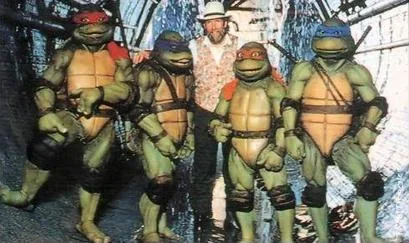
Jim Henson with the Turtle creatures, one of the last projects of his Creature Shop.

Creature suits by Jim Henson’s Creature Shop, with Brian Henson as second-unit director and chief puppeteer; fight choreography by Pat Johnson; cinematography by John Fenner; production design by Roy Forge Smith; editing by Sally Menke, William D. Gordean and James R. Symons; score by John Du Prez.

★ THE SOUND OF 1990

A John Du Prez score and a UK number one anthem.

The score came from the unlikeliest of composers: John Du Prez, music director on several Monty Python films and the composer of A Fish Called Wanda. His mix of orchestra, proto-hip-hop beats and surf rock sat under the film, while the SBK song soundtrack, led by M.C. Hammer and going platinum, carried the radio hits. Above it all was Turtle Power by Partners in Kryme, the first hip-hop single ever to top the UK chart, where it stayed at number one for four weeks. The full Du Prez score finally got a standalone release on Waxwork Records in 2020, embedded below.

Score highlights

  • CrimewaveJohn Du Prez (opens with the Foot Clan motif)
  • Teenage Mutant Ninja TurtlesJohn Du Prez (the TMNT funk theme)
  • Shredder’s Big EntranceJohn Du Prez (Shredder on taiko drums)
  • Sewer SurfinJohn Du Prez (a Dick Dale surf homage)
  • Splinter’s Tale I and IIJohn Du Prez, dialogue by Kevin Clash
  • The Fall of ShredderJohn Du Prez (the climax)

On the radio, in the film

  • Turtle Power! - Partners in KrymeThe end-credits anthem. UK number one for four weeks, the first hip-hop single to top the UK chart.
  • This Is What We Do - M.C. HammerThe opening track of the SBK song soundtrack, recorded by Hammer at the height of his fame.
  • Spin That Wheel - Hi Tek 3 feat. Ya Kid KA new-jack-swing single released ahead of the film in February 1990.
  • 9.95 - SpunkadelicA dance-pop cut on the platinum song soundtrack album.
  • Family - RiffAn R and B number on the SBK soundtrack, written by Monty Seward.
  • Let the Walls Come Down - Johnny KempA soundtrack cut from the New Jack Swing star behind Just Got Paid.

Turtle Power by Partners in Kryme, the film's UK number one anthem, via YouTube.

★ OFFICIAL TRAILER

Watch the official trailer.

Official 1990 trailer via New Line Cinema on YouTube. Embedded with youtube-nocookie for viewer privacy.

★ THE CAMPAIGN & THE PREMIERE

Turtlemania, a pizza war and a record opening.

Pizza Hut, a twenty million dollar tie-in

Pizza Hut ran a twenty million dollar marketing campaign across print, radio and television with rebate coupons, even though Domino’s, not Pizza Hut, was the pizza actually placed on screen. Mikey shorting the Domino’s guy three dollars for being two minutes late is the films in-joke about that guarantee.

Turtlemania at its absolute peak

The film landed amid a cartoon, arcade and home games, cereal and a sponsored live concert tour all running at once. Roughly 1.1 billion dollars of Playmates Turtles toys sold between 1988 and 1992, making them the third best-selling toy figures to that point.

The film every studio passed on

Disney, Columbia, Universal, MGM/UA, Orion, Fox, Paramount and Warner Bros all turned down distribution, fearing a Masters of the Universe-style bomb. Tiny New Line Cinema picked it up mid-production and turned it into the studio’s then-biggest hit.

A record opening, then a sudden loss

The film opened number one on March 30, 1990 with more than twenty-five million dollars, the biggest opening weekend an independent film had ever had. Seven weeks later Jim Henson died, leaving the Creature Shop suits as one of his final works.

★ EASTER EGGS & DEEP CUTS

For the fans who never put the toys away.

Tap a card to flip it.

Did you know

  • The suits were built by Jim Henson’s Creature Shop in London, one of Henson’s last projects before his death seven weeks after the premiere. Henson called the creatures the most advanced he had ever worked with.
  • Roger Corman almost made it in the mid-eighties, with a pitch starring Sam Kinison, Gallagher, Bobcat Goldthwait and Billy Crystal in turtle makeup.
  • Josh Pais was body-cast head to toe at the Creature Shop with two straws in his nose, and was kept in the plaster longer than needed just to see if he would panic.
  • Corey Feldman, voicing Donatello, was the only actual teenager voicing a Turtle. Brian Tochi and Robbie Rist were the only voice actors in all three original films.
  • Splinter is the original Elmo: Kevin Clash performed and voiced the rat sensei, and later created Sesame Street’s Elmo.
  • On a budget of about 13.5 million dollars the film grossed over 202 million worldwide, the highest-grossing independent film of its time, a record that stood until The Blair Witch Project in 1999.

★ FREQUENTLY ASKED

Everything people ask about the film.

Is there a post-credits scene?

No. The 1990 film has no post-credits scene. The Partners in Kryme anthem Turtle Power plays over the closing credits, but nothing follows them.

How long is the 1990 movie?

About one hour and thirty-three minutes (93 minutes), rated PG.

Who actually played the Turtles?

Each Turtle was three people: a suit performer, a voice actor and a remote facial puppeteer. Leonardo was David Forman, Brian Tochi and Martin P. Robinson; Donatello was Leif Tilden, Corey Feldman and David Rudman; Michelangelo was Michelan Sisti, Robbie Rist and Mak Wilson. Raphael was Josh Pais, who both wore the suit and voiced him, with David Greenaway on the face. Kevin Clash performed and voiced Splinter.

Is it faithful to the comics?

Largely, yes. Den of Geek calls it one of the most faithful comic adaptations ever made, drawing the origin, Splinter’s history, the farmhouse exile and the Shredder finale from the early Mirage comics. The colour-coded bandanas, pizza love and April as a TV reporter come from the 1987 cartoon.

Did it do well at the box office?

Yes. On a budget of about 13.5 million dollars it opened to more than 25 million, the biggest opening weekend an independent film had had to that point, and grossed about 135 million domestically and 202 million worldwide, the highest-grossing independent film of its time.

Who built the Turtle suits?

Jim Henson’s Creature Shop in London, using animatronic faces driven by a joystick and a lip-sync camera helmet. It was one of Henson’s last projects; he died on May 16, 1990, seven weeks after the March 30 premiere.

Who scored the film?

British composer John Du Prez, better known for A Fish Called Wanda and several Monty Python films. The full score finally got a standalone release on Waxwork Records in 2020. The song soundtrack came out on SBK and went platinum.

Is the Vanilla Ice Ninja Rap in this film?

No. Ninja Rap and Go Ninja Go belong to the 1991 sequel, The Secret of the Ooze. The 1990 film’s anthem is Turtle Power by Partners in Kryme.

★ WHERE TO WATCH

Where to watch the 1990 film.

No subscription service currently streams the 1990 film. Rent it digitally, or own Arrow Video's 2025 4K restoration of the full original trilogy.

Some links on this page are affiliate links that support ninjaturtles.tv. We may earn a commission on qualifying purchases at no extra cost to you.